Bristol Roof Surveys: What They Cover and When You Need One
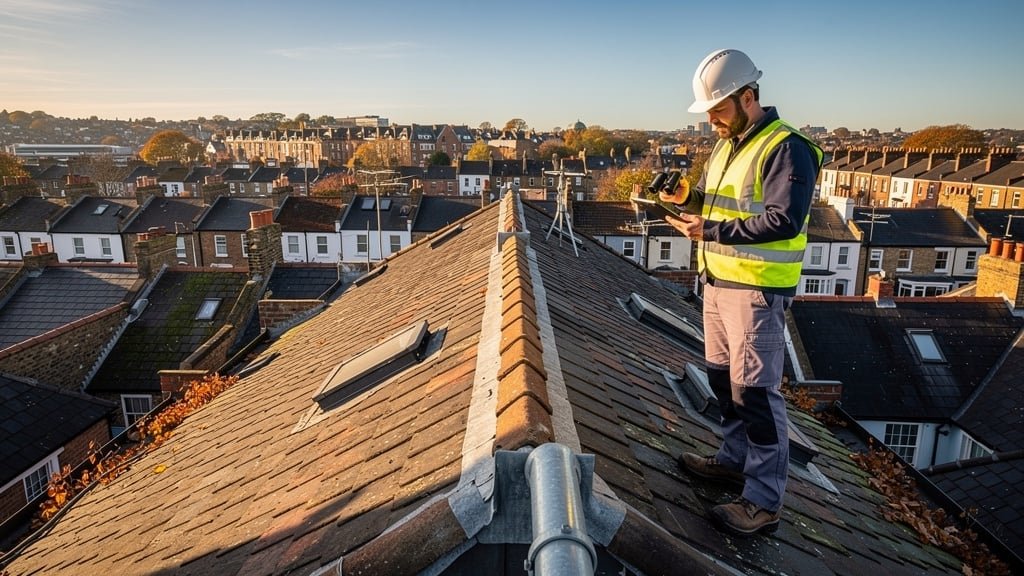
The roof is the single most important element of any building. It keeps out rain, retains heat, and protects everything inside — yet it's also one of the most neglected parts of a property until something goes badly wrong.
For Bristol homeowners and buyers, the city's high rainfall, Atlantic winds, and predominantly Victorian housing stock create a particularly demanding environment for roofs. We regularly find significant roof defects during standard building surveys — defects that the owners had no idea about, and which were not visible from ground level.
In this guide, we explain exactly what a roof survey covers, when you need one, what defects are most commonly found on Bristol properties, and how to interpret what you're told.
What Is a Roof Survey?
A roof survey is a detailed inspection of all accessible roof areas carried out by a qualified surveyor or specialist roofing contractor. It goes well beyond the visual glance that a standard drive-by mortgage valuation provides, and beyond what many homeowners attempt themselves from ground level.
In the context of a full RICS Level 3 Building Survey, the roof inspection is one of the most critical components. Our surveyors check every accessible element of the roof structure, coverings, flashings, gutters, and internal roof space — noting the condition of each and identifying any defects that require attention.
A standalone roof survey, as opposed to the roof element within a full building survey, is typically commissioned when:
- You suspect roof problems but don't need a full building survey
- A building survey has flagged roof concerns that warrant closer investigation
- You're planning a roof replacement and want an independent assessment before getting quotes
- An existing home is showing signs of water ingress and you need to identify the source
- You're a landlord keeping on top of planned maintenance
What Does a Surveyor Check During a Roof Inspection?
A thorough roof inspection by a surveyor covers all of the following elements. Understanding what each involves helps you interpret the findings in your report.
Roof Coverings
The most visible part of any roof. For Bristol's Victorian terraces and Edwardian semis, this typically means clay or concrete tiles, or in older properties Welsh slate. Our surveyors check for:
- Broken, slipped, or missing tiles/slates
- General deterioration or spalling of tile surfaces
- Evidence of previous patchwork repairs that may indicate ongoing problems
- Ridge and hip tiles — often the first area to fail as mortar bedding deteriorates
- Verge details at gable ends — a frequent source of wind damage in Bristol
Flashings and Junctions
Flashings seal the critical junction points where the roof meets walls, chimneys, dormer windows, and roof lights. Poor or failed flashings are one of the most common causes of water ingress in Bristol properties. We check:
- Lead or mortar flashings around all chimney stacks
- Abutment flashings where the roof meets party walls or extensions
- Valley gutters in M-shaped roofs (common in Bristol terraced houses)
- Soakers around roof windows and dormers
Chimney Stacks
Bristol's Victorian terraces have a lot of chimney stacks — and they're a disproportionate source of problems. Many haven't been used since central heating became widespread and have been capped, repointed inconsistently, or simply ignored. Common issues include:
- Defective pointing and open joints in brickwork
- Failed or missing lead flashings at the base
- Loose or missing chimney pots
- Structural lean or movement in the stack itself
- Dampness penetrating into bedrooms through chimney breasts
Gutters and Rainwater Goods
Overflowing, blocked, or failed gutters are responsible for a huge amount of damp and structural damage to Bristol properties. Our inspection covers:
- Gutter alignment and falls towards downpipes
- Blocked or overflowing gutters
- Leaking joints and brackets
- Downpipe condition and whether they discharge correctly to drains
- Evidence of vegetation growth in gutters
Roof Structure (Loft Space)
Where access is possible, we inspect the structural roof timbers from inside the loft space. This reveals issues that are invisible from outside, including:
- Rafter and purlin condition — looking for rot, beetle damage, or structural movement
- Adequacy of the existing structure for current or planned loads
- Whether the roof has been strengthened or altered previously
- Evidence of water staining indicating past or current ingress points
- Quality and coverage of insulation (relevant for energy performance)
- Ventilation — inadequate ventilation leads to condensation and timber decay
Concerned About Your Bristol Roof?
Our surveyors inspect hundreds of Bristol roofs every year. Whether you're buying, selling, or just want peace of mind, we can advise you on the condition and any works needed.
Get a Free QuoteCommon Roof Defects We Find in Bristol Properties
Based on our surveying work across Bristol — from Clifton and Redland to Bedminster and Knowle — here are the most frequently encountered roof defects and what they mean for you:
| Defect | Typical Cause | Severity | Indicative Cost |
|---|---|---|---|
| Slipped or broken slates/tiles | Nail fatigue, storm damage, age | Medium | £200–£800 (patching) |
| Failed ridge tile mortar | Frost damage, age, settlement | Medium | £400–£1,200 |
| Defective chimney flashings | Lead fatigue, poor original work | High | £500–£1,500 per stack |
| Blocked / failed valley gutter | Debris build-up, lead failure | High | £600–£2,000 |
| Rotten roof timbers | Long-term water ingress, poor ventilation | High | £1,500–£8,000+ |
| Blocked gutters | Leaf/debris accumulation | Low–Medium | £100–£300 (clearance) |
| End-of-life covering (full re-roof needed) | General age deterioration | High | £6,000–£20,000+ |
One important note: roof costs vary significantly depending on access, materials, and the extent of works required. The figures above are indicative ranges based on our experience of Bristol properties. Always obtain at least three written quotes from reputable, insured roofing contractors.
Roof Types Common in Bristol Properties
Bristol's architectural diversity means our surveyors encounter a wide range of roof types, each with its own specific characteristics and vulnerabilities:
Traditional Pitched Roofs (Victorian/Edwardian Terraces)
The dominant roof type across Bristol's inner suburbs — Bedminster, Easton, St Pauls, Totterdown, Windmill Hill. Typically covered with Welsh or Spanish slate on older properties, or clay/concrete tiles on inter-war and post-war buildings. Many Victorian properties in Bristol still have their original slate, which can be in excellent condition if it hasn't been interfered with — but poor-quality patching repairs using incompatible materials are extremely common.
M-Shaped or Double-Pitch Roofs (Terraced Mid-Sections)
Many Bristol mid-terrace properties have an M-shaped or butterfly roof profile, with a central valley gutter running along the party wall. These valley gutters are one of the most problematic elements we encounter — they're difficult to access for maintenance, accumulate debris, and the lead lining degrades over time. When a valley gutter fails, it typically causes water damage to ceilings and structural timbers on both sides of the party wall.
Flat Roofs (Extensions and Bay Windows)
Many Bristol properties have flat-roofed rear extensions or bay window roofs. Older flat roofs covered in built-up felt typically have a lifespan of 15–25 years and are often well past their service life when we inspect them. Modern alternatives — GRP fibreglass, EPDM rubber, and single-ply membranes — perform significantly better and should be considered when flat roofs need replacement.
Mansard and Dormer Roofs (Conversion Properties)
Increasingly common in Bristol as loft conversions have been added to Victorian and Edwardian properties. These introduce additional complexity — more junctions, more flashings, and often windows within the roof slope. The quality of original conversion work varies enormously, and poor detailing around dormer windows is a frequent source of water ingress.
When Do You Actually Need a Roof Survey?
There are several situations where a dedicated roof survey — or at minimum a thorough roof inspection as part of a full building survey — is genuinely important:
Before Buying a Bristol Property
If you're buying any property built before 1980 in Bristol, a thorough roof inspection should be non-negotiable. The roof is typically the most expensive single element to repair or replace, and problems here can quickly become major structural issues if left unaddressed. Our Level 3 Building Survey includes a detailed roof inspection as standard.
After Purchasing an Older Property
If you've recently bought an older Bristol property without a full survey, or if the survey you received was limited in scope, commissioning a roof inspection gives you a clear picture of where you stand and what maintenance to plan for.
Before Major Works
Planning a loft conversion, rear extension, or significant refurbishment? A roof survey before you start helps you plan the scope of works accurately and avoid unpleasant surprises mid-project when scaffolding is already up.
After Storm Damage
Bristol regularly experiences strong westerly winds, particularly in autumn and winter. After any significant storm event, having a surveyor check for damage — particularly to ridge tiles, flashings, and verges — can prevent minor storm damage becoming a major water ingress problem.
When You Notice Warning Signs
Don't wait until there's water dripping through the ceiling. Earlier warning signs include:
- Damp patches or staining on ceilings or upper walls
- Musty smell in loft space
- Daylight visible through the roof from inside the loft
- Gutters that overflow during rain despite apparently being clear
- Missing or displaced ridge tiles visible from the street
- Cracked or failed pointing around chimney stacks
What Is Included in a Full Building Survey Roof Inspection?
When Bristol Surveyors carries out a Level 3 Building Survey, our roof inspection includes all of the following:
- External inspection from ground level using binoculars where access to the roof covering is not possible
- Close inspection from eaves level where safely achievable
- Internal loft inspection — we inspect accessible roof spaces via hatch or head-and-shoulders access
- Moisture readings from ceiling boards and timbers in the loft space
- Assessment of all flashings, valley gutters, and abutment details visible from ground level or eaves
- Gutters and rainwater goods condition assessment
- Photographic record of all noted defects
- Written report with condition ratings, description of defects, causes, and recommended actions with indicative cost guidance
It's important to note that surveyors are not roofing contractors and do not walk on roof surfaces as a matter of course. Where a close-up inspection of the roof covering is genuinely needed and safely achievable, we will note this in the report and recommend a specialist roofer carries out a more detailed inspection.
How to Interpret Your Roof Survey Findings
A good survey report doesn't just list defects — it helps you understand their significance. Here's how to read the findings:
Condition Ratings in RICS Reports
In our RICS Level 3 reports, roof elements are rated using the standard traffic light system:
- Condition Rating 1 (Green): No repair needed at the time of inspection
- Condition Rating 2 (Amber): Defects that need attention but aren't urgent or immediately serious
- Condition Rating 3 (Red): Serious defects requiring immediate or urgent attention
What to Do With a Red Rating
A Condition 3 (red) rating on a roof element doesn't necessarily mean the property is unsalvageable — but it does mean you need to act. If you receive a survey report with significant roof defects rated as Condition 3:
- Obtain quotations for the repair work from reputable, NFRC-registered roofing contractors
- Use these quotations to negotiate a price reduction with the seller
- Factor the repair costs into your overall purchase budget before exchanging contracts
- Consider whether the property is still the right purchase at any price if multiple serious defects are identified
Choosing the Right Surveyor for Your Roof Inspection
Not all roof inspections are equal. Here's what to look for:
- RICS qualification: A surveyor (MRICS or FRICS) has professional standards and accountability that unregulated inspectors do not
- Local experience: A surveyor who works regularly in Bristol will understand the specific challenges of local building stock, construction methods, and materials
- Full written report: Avoid verbal-only assessments — you need a written, dated report that documents the findings in detail
- Professional indemnity insurance: Essential if the surveyor misses something significant
- Transparency about limitations: A good surveyor will clearly state in the report what they could and couldn't access, so you know the scope of the inspection
"We bought a Victorian semi in Bishopston and the Level 3 survey flagged the original slate roof as approaching the end of its serviceable life. The surveyor's cost estimate turned out to be almost exactly right when we got quotes — it helped us negotiate £8,500 off the purchase price and budget properly for the re-roof which we did in year two." — Adam T., Bishopston
Frequently Asked Questions
The cost of a dedicated roof survey depends on the property size and complexity, but typically ranges from £300 to £600 for a standalone inspection. As part of a full RICS Level 3 Building Survey, the roof inspection is included — and given the cost of potential roof repairs, the survey almost always represents excellent value. Contact us for a free, no-obligation quote tailored to your specific property.
Surveyors follow RICS guidance and do not walk on roof surfaces unless specifically equipped and contracted to do so. Standard inspections are carried out from ground level using binoculars, from eaves level where achievable, and from inside the loft space. Where a more detailed roof-level inspection is required, we'll note this and recommend you commission a specialist roofing contractor. This limitation is clearly stated in our reports so you always know the scope of the inspection.
Not necessarily. A Condition 3 rating means there's a defect that needs urgent attention, but it doesn't automatically mean the property isn't worth buying. The key questions are: what are the likely repair costs, and can you negotiate these off the purchase price or get the vendor to carry out the works before exchange? Our surveyors are always happy to discuss the findings with you after you've read the report and help you understand the practical implications.
A surveyor provides an independent, impartial assessment of the roof's condition. A roofing contractor, while highly skilled at the physical work, has an inherent commercial interest in identifying work to be done. For an objective assessment of condition — particularly when buying a property — a surveyor's report carries more weight and offers professional indemnity protection. Many buyers get both: a surveyor's report for the independent assessment, and contractor quotes to understand the cost of any recommended works.
Good quality Welsh slate, properly maintained, can last well over 100 years. Many Bristol Victorian properties still have their original slate roofs in reasonable condition. The issue is usually not the slate itself but the nails — iron nails used in original Victorian construction eventually corrode and fail, causing slates to slip. The flashings, ridge tiles, and valley gutters on older roofs also have a finite lifespan and require periodic renewal regardless of the condition of the slate itself.

James Hartley
Director, Bristol Surveyors
James is the founder and director of Bristol Surveyors. A Bristol native with over 20 years of surveying experience, he specialises in structural surveys on period properties across Bristol and the South West — and has inspected more Bristol roofs than he cares to count.